
Want to go directly to the Product Page…Click Here!
There are certain childhood memories that just stick with you forever — and for me, one of those memories was spending Memorial Day weekend hauling wheelbarrows full of mulch around the yard.
When I was younger, I honestly thought my parents made us help spread mulch simply because they wanted the house to “look pretty.” I definitely didn’t understand the purpose behind it at the time. All I knew was that while my friends were relaxing or hanging out, I was outside sweating in the summer heat moving endless piles of mulch that never seemed to shrink.
Fast forward years later, Joe and I bought our first house, and let’s just say… mulching flower beds was not high on my priority list.
Like many homeowners, we learned some landscaping lessons the hard way. One thing I quickly realized? My parents absolutely knew what they were talking about when it came to mulch.
Now every spring, mulching our flower beds has become one of those must-do projects — even if I still complain about it a little while doing it.
And honestly? Mulch does way more than simply make your landscaping look beautiful.
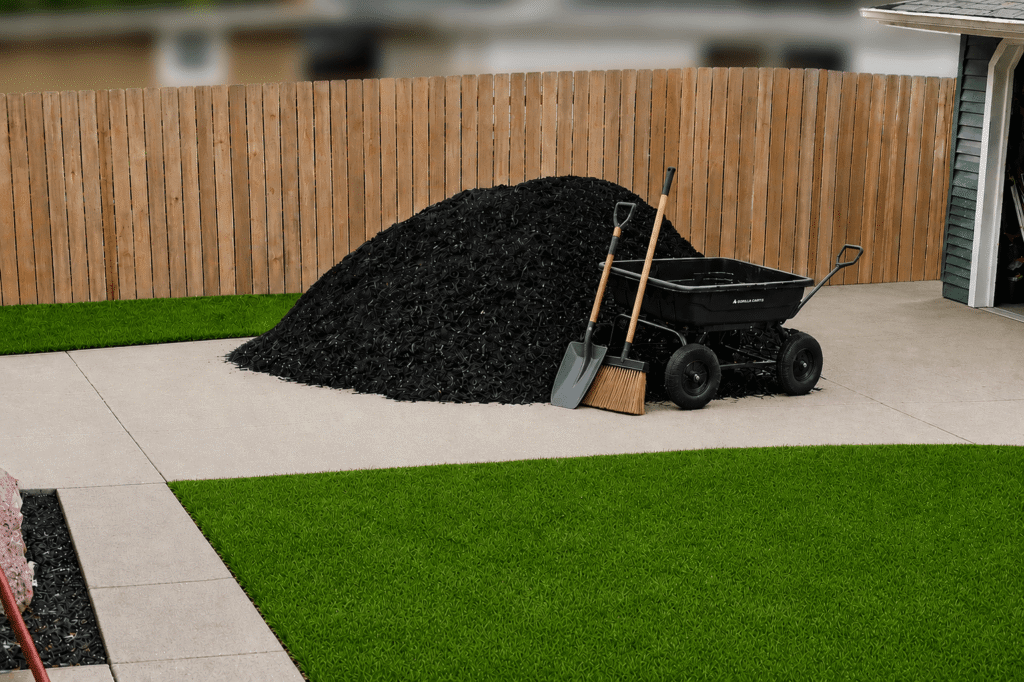
Why Mulching Flower Beds Matters
Most people think mulch is strictly for aesthetics, and yes — mulch definitely adds instant curb appeal to your home.
Whether you prefer dark brown mulch, black mulch, cedar mulch, or a more natural wood-chip look, your choice of mulch can completely change the personality and style of your landscaping.
But mulch is much more than just decoration.
When properly applied, mulch helps:
- Retain moisture in the soil
- Reduce weeds
- Regulate soil temperature
- Protect plant roots
- Improve soil quality over time
- Reduce watering needs
- Create healthier plants and flowers
It’s one of the easiest ways to improve both the appearance and health of your landscaping at the same time.
How Much Mulch Should You Use?
A good rule of thumb is to apply mulch about 2–3 inches thick around flower beds, trees, and shrubs.
However, one very important thing to remember:
Keep Mulch Away From Plant Stems and Tree Trunks
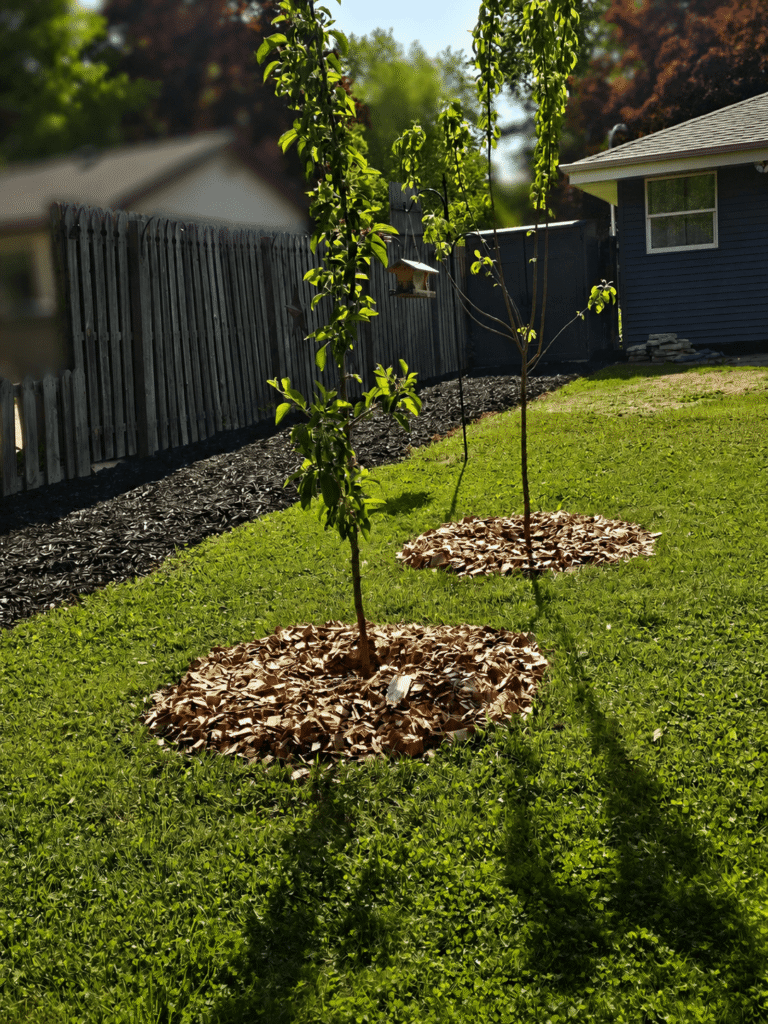
Piling mulch directly against plants or tree trunks can trap moisture and potentially cause:
- Root rot
- Mold growth
- Pest issues
- Plant damage
Instead, leave a few inches of breathing room around the base of plants and trees.
Trust me — replacing dead shrubs and plants after an expensive nursery trip is far less fun than taking the extra few minutes to mulch properly.
Mulch Helps Retain Moisture
One of the biggest benefits of mulch is moisture retention.
Plants thrive when their soil stays consistently hydrated — not soaking wet and not bone dry.
Mulch acts as a protective barrier over the soil, helping reduce evaporation during those hot summer days. This means:
- Less frequent watering
- Lower water bills
- Healthier plants during heat waves
- Less stress on your flowers and landscaping
And here in Wisconsin, summers can get surprisingly hot and dry at times, so every bit of moisture retention helps.
Mulch Helps Prevent Weeds
Now this right here might be my favorite benefit of mulching.
Because let’s be honest:
Nobody enjoys weeding.
Mulch blocks sunlight from reaching weed seeds, making it much harder for weeds to grow and spread throughout your flower beds.
While mulch won’t eliminate every weed forever, it drastically cuts down on the amount of maintenance required during the summer.
And fewer weeds means more time actually enjoying your yard instead of constantly pulling unwanted plants out of the ground.
Mulch Helps Regulate Soil Temperature
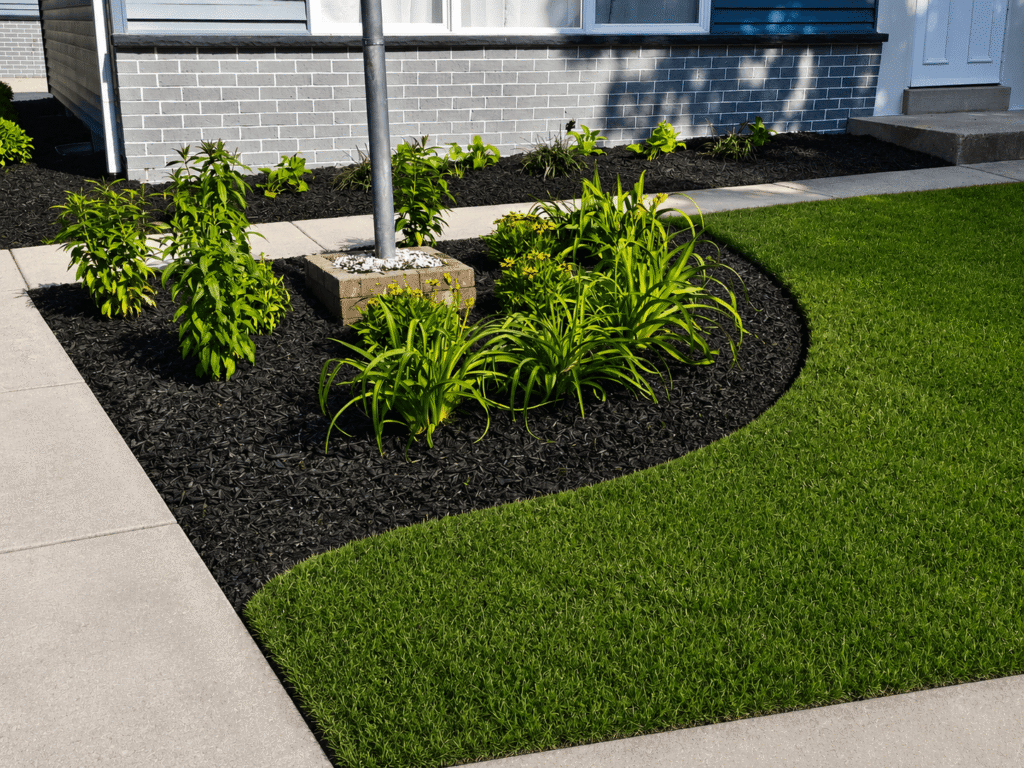
Mulch also acts like insulation for your soil.
During hot summer weather, mulch helps keep soil temperatures cooler and more stable, protecting delicate plant roots from excessive heat.
In cooler weather, mulch can also help retain warmth in the soil a little longer.
This temperature regulation helps plants stay healthier and reduces stress during changing weather conditions.
Mulch Improves Soil Over Time
One thing many people don’t realize is that mulch is often made from organic materials like:
- Wood chips
- Bark
- Leaves
- Compost blends
As mulch slowly breaks down over time, it adds nutrients back into the soil.
That means your flower beds gradually become richer and healthier naturally.
Yes, eventually mulch needs to be refreshed or replaced — the part most of us dread — but that breakdown process is actually beneficial for your landscaping.
Make Mulching Easier With the Right Tools
If there’s one thing we’ve learned while landscaping our yard, it’s this:
The right equipment makes a massive difference.
Hauling mulch bags, moving dirt, transporting plants, and spreading landscaping materials becomes much easier with a quality garden cart.
If you’re planning a big landscaping weekend, check out our post The Best Garden Cart to Make This Year’s Gardening Easy 2026 and why it completely changed the way we handle outdoor projects.
Your back will thank you later.
Choosing the Best Mulch for Flower Beds
There are many different types of mulch available, and choosing the right one depends on your landscaping goals.
Popular options include:
Shredded Hardwood Mulch
Great for moisture retention and long-lasting coverage.
Cedar Mulch
Naturally insect resistant and has a pleasant smell.
Black Mulch
Creates a bold, modern landscaping look and makes plants stand out beautifully.
Brown Mulch
A classic option that blends naturally with most landscapes.
Pine Bark Mulch
Lightweight and excellent for drainage.
When choosing mulch, focus on both function and aesthetics to match your home’s style.
Mulching Is Work… But It’s Worth It
So what are we doing this Memorial Day weekend?
Yep… mulch.
Am I excited about hauling bags and sweating in the summer heat? Absolutely not.
But after years of learning the hard way, I now understand there’s a purpose behind all of it.
Mulch protects plants.
Mulch improves soil.
Mulch reduces weeds.
Mulch conserves water.
Mulch helps landscaping thrive.
And honestly, sometimes those annoying chores we dreaded growing up actually taught us something valuable.
So if you’re debating whether mulching your flower beds is worth the effort — it absolutely is.
Create the beautiful landscape.
Protect your plants.
Save yourself future headaches.
And maybe learn a lesson or two along the way.
Affiliate & Product Disclaimer
Some posts on this website may contain affiliate links. This means we may earn a small commission at no additional cost to you if you make a purchase through these links. These commissions help support the content we create. However, we only share products we personally use, trust, or believe may provide value.
No Guarantees
We make no guarantees about the effectiveness, reliability, or results of any products, services, or recommendations mentioned on this site.




[…] Why Mulching Your Flower Beds Is the Best Things You Can Do […]